
Uncategorized

The Ultimate Home Emergency Kit: Why You Need More Than Just One Light

Power outages, sudden storms, and unexpected car trouble don’t announce themselves—and when they happen, the first thing you lose is visibility. That’s why a reliable home emergency kit should never rely on a single light source. One device might be powerful but short on runtime, another might be great for room lighting but not ideal for distance or signaling. A smart setup uses layers of light: a focused beam for searching and moving safely, a broader light for lighting up a room, and an emergency-ready option you can grab instantly. For example, you can build a practical lighting trio around a rechargeable torch like Britelite 3501 ESCOR 30W Rechargeable Aluminum LED Flashlight, a higher-output option such as Britelite 3502 MASCOT 60W Rechargeable Aluminum LED Flashlight, and an emergency-friendly light like Britelite L990002 800 Lumens—each covering a different job so you’re not left exposed when conditions change. What “Emergency Lighting” Really Means Emergency lighting is not just about having a flashlight in a drawer. It is about having the right type of light available for the right situation. During a blackout, you may need to move safely through dark hallways, check the electrical panel, help family members, prepare food, or signal for assistance. A single light source may not handle all of these tasks effectively. That is why a well-prepared home should include more than one lighting option. Each light should serve a specific purpose, from short-distance visibility to wide-area illumination and long-runtime backup lighting. The 3 Lighting Layers Every Home Should Have 1. A Focused Light for Movement and Searching The first layer is a focused handheld light. This type of light is useful when you need to move through the house, look inside cabinets, check outdoor areas, inspect a fuse box, or walk to your car during a power outage. A focused beam helps you see details clearly and makes movement safer. It is especially useful when you need direction rather than general room brightness. In emergencies, this type of light should be easy to grab, comfortable to hold, and powerful enough to guide you through dark areas confidently. 2. A Brighter Light for Outdoor or Long-Distance Visibility The second layer is a stronger light source designed for larger spaces or longer distances. This is useful for outdoor checks, garages, driveways, basements, stairways, and situations where you need more reach. A higher-output light can help you identify problems quickly, such as fallen branches, water leaks, damaged gates, or obstacles around your property. It also adds a sense of safety when moving outside at night, especially during storms or electrical failures. 3. A Practical Emergency Light for Room Coverage The third layer is a light that can support general visibility inside the home. During a blackout, you may need lighting that can sit on a table, illuminate a room, or stay on while family members gather in one safe area. This type of light is especially useful for cooking, reading instructions, helping children, caring for elderly family members, or simply keeping the room comfortable until power returns. It should provide enough brightness without requiring you to hold it constantly. Why One Light Is Not Enough Relying on only one light may seem simple, but it creates risk. If the battery is low, the light is misplaced, or the beam is not suitable for the situation, you may be left without proper visibility. Different emergencies require different lighting needs. A narrow beam is good for searching, but it may not light a room well. A wide light is useful indoors, but it may not reach far enough outside. A powerful torch may be excellent for inspection, but it may not be convenient for long periods of indoor use. By combining different types of lighting, your emergency kit becomes more reliable, flexible, and practical. This approach reduces stress during unexpected situations and helps everyone in the home respond more calmly. What to Look for in Emergency Lighting Choosing emergency lighting is not only about buying the brightest option. In a real power outage, the best light is the one that is reliable, easy to use, safe, and suitable for your environment. Before adding any light to your emergency kit, consider the following factors. 1. Battery Life and Rechargeability Battery life is one of the most important features in emergency lighting. A powerful light is useful, but if it runs out too quickly, it may not support you through a long blackout. Rechargeable lighting is often more practical for home use because it can be charged in advance and reused many times. However, it is important to check the light regularly and avoid storing it completely discharged for long periods. For emergency readiness, create a simple routine: • Charge your emergency lights at least once every few months • Test them briefly to make sure they work • Store charging cables in the same place as the lights • Avoid waiting until an outage happens to discover a low battery 2. Brightness and Beam Type Brightness is usually measured in lumens, but higher lumens do not always mean better performance for every situation. A very bright light may be useful outdoors, while a softer light may be more comfortable indoors. You should also pay attention to the beam type: • Focused beam: better for searching, walking, and checking distant areas • Wide beam: better for lighting up a room, table, or shared space • Adjustable beam: useful when you need flexibility in different situations • The best emergency kit usually includes more than one beam style, so you are prepared for both movement and room coverage. 3. Build Quality and Durability Emergency lights should be durable enough to handle real-world use. During storms, power failures, or urgent situations, lights may be dropped, carried outside, or used in less-than-ideal conditions. Look for solid construction, comfortable grip, stable design, and materials that can handle regular use. A well-built light is especially important for torches used outdoors, in garages, or in vehicles. 4. Ease of Use In an emergency, complicated controls can become a problem. A good emergency light should be easy for anyone in the household to operate, including children, elderly family members, or guests. Simple buttons, clear modes, and comfortable handling make a big difference. If a light has multiple modes, make sure everyone knows how to switch between them before an emergency happens. 5. Safety Features Safety should always be part of your decision. Good emergency lighting helps prevent accidents by reducing the risk of falls, burns, and unsafe movement in the dark. Useful safety-related features may include: • Stable base or anti-roll design • Low-heat LED performance • Overcharge protection • Strong housing • Emergency flashing or signaling mode • Reliable charging port protection These details may seem small, but they can be very valuable when the power goes out unexpectedly. Where to Keep Emergency Lights at Home Having emergency lights is only helpful if you can find them quickly. Many people own flashlights but keep them in random drawers, storage boxes, or places that are difficult to reach in the dark. For better preparation, keep lights in predictable locations such as: • Near the main entrance • In the kitchen • Beside the bed • In the living room • Near the electrical panel • In the car • Inside a dedicated emergency kit Everyone in the household should know where the lights are stored. If possible, use the same storage spots consistently so there is no confusion during an outage. Quick Emergency Lighting Checklist • At least two light sources in the home (ideally more) • One light near the bedroom • One light near the kitchen/living area • One light in the car • Lights checked/charged every 1–3 months • Cables stored with the lights • Everyone in the home knows where lights are kept Conclusion A strong home emergency kit is built on redundancy, not guesswork. Having only one light source creates an avoidable risk—because emergencies change quickly, and a single beam type or battery level may not match the moment. When you plan your lighting in layers (search light, stronger distance light, and room-coverage emergency light), you get a setup that is safer, more comfortable, and far more reliable during outages, storms, and unexpected situations.

Power outages, sudden storms, and unexpected car trouble don’t announce themselves—and when they happen, the first thing you lose is visibility. That’s why a reliable home emergency kit should never rely on a single light source. One device might be powerful but short on runtime, another might be great for room lighting but not ideal for distance or signaling.

A smart setup uses layers of light: a focused beam for searching and moving safely, a broader light for lighting up a room, and an emergency-ready option you can grab instantly. For example, you can build a practical lighting trio around a rechargeable torch like Britelite 3501 ESCOR 30W Rechargeable Aluminum LED Flashlight, a higher-output option such as Britelite 3502 MASCOT 60W Rechargeable Aluminum LED Flashlight, and an emergency-friendly light like Britelite L990002 800 Lumens—each covering a different job so you’re not left exposed when conditions change.

What “Emergency Lighting” Really Means

Emergency lighting is not just about having a flashlight in a drawer. It is about having the right type of light available for the right situation. During a blackout, you may need to move safely through dark hallways, check the electrical panel, help family members, prepare food, or signal for assistance. A single light source may not handle all of these tasks effectively.

That is why a well-prepared home should include more than one lighting option. Each light should serve a specific purpose, from short-distance visibility to wide-area illumination and long-runtime backup lighting.

The 3 Lighting Layers Every Home Should Have

1. A Focused Light for Movement and Searching

The first layer is a focused handheld light. This type of light is useful when you need to move through the house, look inside cabinets, check outdoor areas, inspect a fuse box, or walk to your car during a power outage.

A focused beam helps you see details clearly and makes movement safer. It is especially useful when you need direction rather than general room brightness. In emergencies, this type of light should be easy to grab, comfortable to hold, and powerful enough to guide you through dark areas confidently.

2. A Brighter Light for Outdoor or Long-Distance Visibility

The second layer is a stronger light source designed for larger spaces or longer distances. This is useful for outdoor checks, garages, driveways, basements, stairways, and situations where you need more reach.

A higher-output light can help you identify problems quickly, such as fallen branches, water leaks, damaged gates, or obstacles around your property. It also adds a sense of safety when moving outside at night, especially during storms or electrical failures.

3. A Practical Emergency Light for Room Coverage

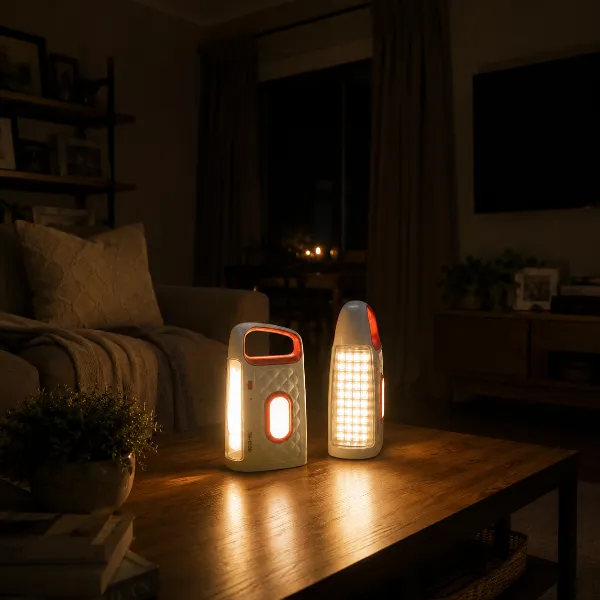
The third layer is a light that can support general visibility inside the home. During a blackout, you may need lighting that can sit on a table, illuminate a room, or stay on while family members gather in one safe area.

This type of light is especially useful for cooking, reading instructions, helping children, caring for elderly family members, or simply keeping the room comfortable until power returns. It should provide enough brightness without requiring you to hold it constantly.

Why One Light Is Not Enough

Relying on only one light may seem simple, but it creates risk. If the battery is low, the light is misplaced, or the beam is not suitable for the situation, you may be left without proper visibility.

Different emergencies require different lighting needs. A narrow beam is good for searching, but it may not light a room well. A wide light is useful indoors, but it may not reach far enough outside. A powerful torch may be excellent for inspection, but it may not be convenient for long periods of indoor use.

By combining different types of lighting, your emergency kit becomes more reliable, flexible, and practical. This approach reduces stress during unexpected situations and helps everyone in the home respond more calmly.

What to Look for in Emergency Lighting

Choosing emergency lighting is not only about buying the brightest option. In a real power outage, the best light is the one that is reliable, easy to use, safe, and suitable for your environment. Before adding any light to your emergency kit, consider the following factors.

1. Battery Life and Rechargeability

Battery life is one of the most important features in emergency lighting. A powerful light is useful, but if it runs out too quickly, it may not support you through a long blackout.

Rechargeable lighting is often more practical for home use because it can be charged in advance and reused many times. However, it is important to check the light regularly and avoid storing it completely discharged for long periods.

For emergency readiness, create a simple routine:

  • Charge your emergency lights at least once every few months
  • Test them briefly to make sure they work
  • Store charging cables in the same place as the lights
  • Avoid waiting until an outage happens to discover a low battery

2. Brightness and Beam Type

Brightness is usually measured in lumens, but higher lumens do not always mean better performance for every situation. A very bright light may be useful outdoors, while a softer light may be more comfortable indoors.

You should also pay attention to the beam type:

  • Focused beam: better for searching, walking, and checking distant areas
  • Wide beam: better for lighting up a room, table, or shared space
  • Adjustable beam: useful when you need flexibility in different situations
  • The best emergency kit usually includes more than one beam style, so you are prepared for both movement and room coverage.

3. Build Quality and Durability

Emergency lights should be durable enough to handle real-world use. During storms, power failures, or urgent situations, lights may be dropped, carried outside, or used in less-than-ideal conditions.

Look for solid construction, comfortable grip, stable design, and materials that can handle regular use. A well-built light is especially important for torches used outdoors, in garages, or in vehicles.

4. Ease of Use

In an emergency, complicated controls can become a problem. A good emergency light should be easy for anyone in the household to operate, including children, elderly family members, or guests.

Simple buttons, clear modes, and comfortable handling make a big difference. If a light has multiple modes, make sure everyone knows how to switch between them before an emergency happens.

5. Safety Features

Safety should always be part of your decision. Good emergency lighting helps prevent accidents by reducing the risk of falls, burns, and unsafe movement in the dark.

Useful safety-related features may include:

  • Stable base or anti-roll design
  • Low-heat LED performance
  • Overcharge protection
  • Strong housing
  • Emergency flashing or signaling mode
  • Reliable charging port protection

These details may seem small, but they can be very valuable when the power goes out unexpectedly.

Where to Keep Emergency Lights at Home

Having emergency lights is only helpful if you can find them quickly. Many people own flashlights but keep them in random drawers, storage boxes, or places that are difficult to reach in the dark.

For better preparation, keep lights in predictable locations such as:

  • Near the main entrance
  • In the kitchen
  • Beside the bed
  • In the living room
  • Near the electrical panel
  • In the car
  • Inside a dedicated emergency kit

Everyone in the household should know where the lights are stored. If possible, use the same storage spots consistently so there is no confusion during an outage.

Quick Emergency Lighting Checklist

  • At least two light sources in the home (ideally more)
  • One light near the bedroom
  • One light near the kitchen/living area
  • One light in the car
  • Lights checked/charged every 1–3 months
  • Cables stored with the lights
  • Everyone in the home knows where lights are kept

Conclusion

A strong home emergency kit is built on redundancy, not guesswork. Having only one light source creates an avoidable risk—because emergencies change quickly, and a single beam type or battery level may not match the moment. When you plan your lighting in layers (search light, stronger distance light, and room-coverage emergency light), you get a setup that is safer, more comfortable, and far more reliable during outages, storms, and unexpected situations.

Leave a Reply

Your email address will not be published. Required fields are marked *